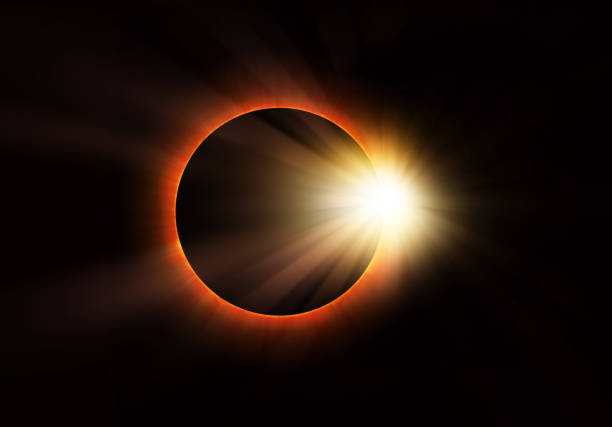
There are few sights in nature more captivating than a solar eclipse. In the middle of the day, the sky begins to darken. Shadows become strangely sharp. The temperature can drop. Birds and animals may behave as if evening has suddenly arrived. And above it all, the Moon slowly moves across the face of the Sun.
It is almost impossible not to look.
That is exactly what makes a solar eclipse so dangerous.
The Sun is normally so overwhelmingly bright that most people instinctively avoid staring at it. During an eclipse, however, something changes. The Moon blocks much of the Sun's visible light, making the Sun appear less dazzling. It can create the illusion that the Sun has somehow become safe to look at.
It hasn't.
Even when the Sun appears partially covered, the remaining visible portion can still deliver enough concentrated radiation to injure the delicate tissues at the back of your eye. And one of the most unsettling things about this damage is that you might not realize it is happening until hours later.
So what actually happens when you stare at an eclipsed Sun?
Your Eyes Were Never Designed for This
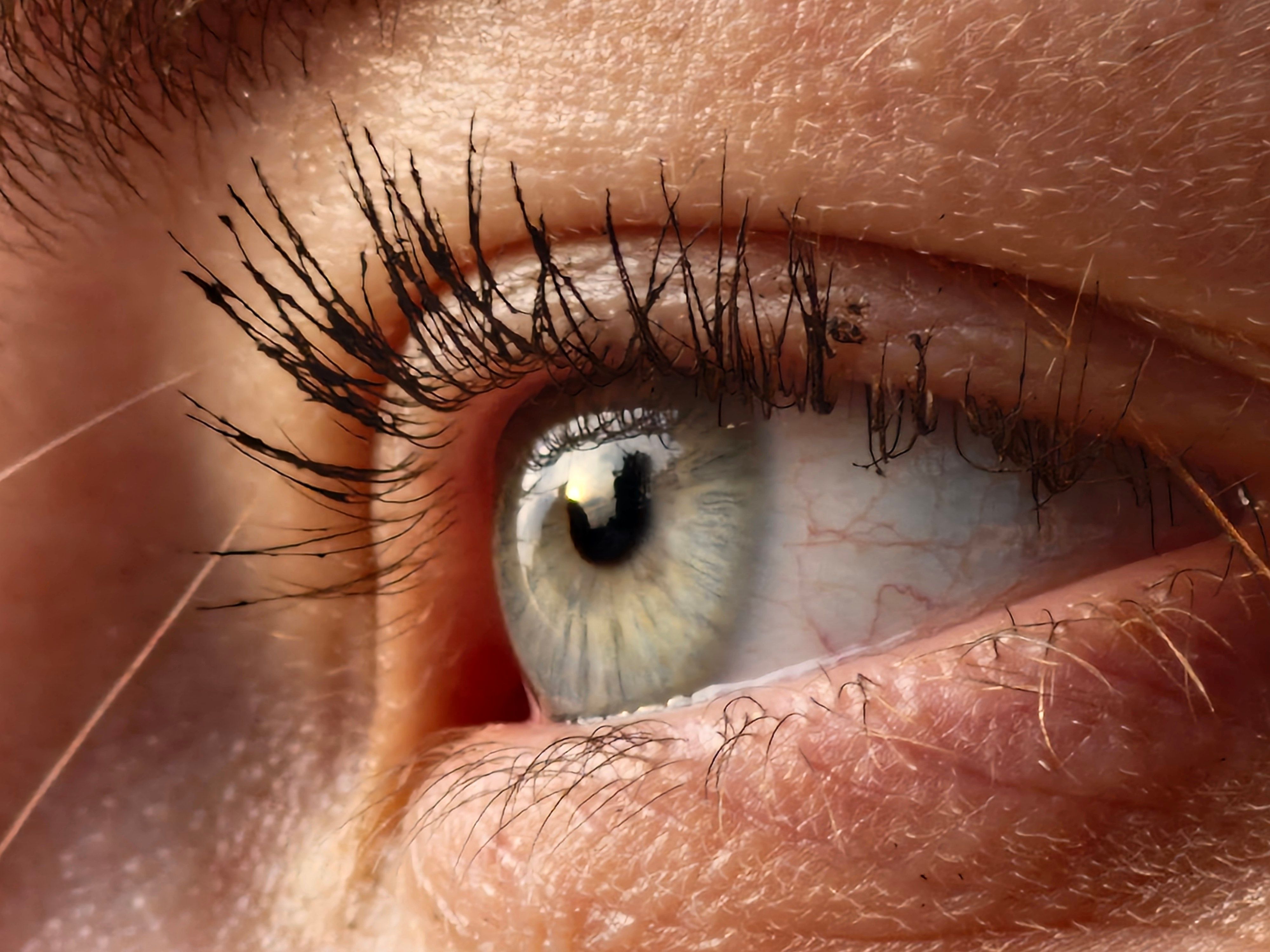
Your eyes are extraordinary pieces of biological engineering. Light enters through the cornea, passes through the pupil and lens, and is focused onto the retina at the back of the eye.
The retina contains millions of light-sensitive cells that convert light into electrical signals. Those signals travel through the optic nerve to your brain, where they become the images you see.
But there is a limit to how much light these tissues can safely handle.
When you look at an ordinary object, light from that object reaches your eyes after being reflected or scattered in many directions. When you look directly at the Sun, you are looking at one of the most powerful sources of light in the sky.
Your eye's lens acts much like a magnifying glass, focusing incoming light onto a tiny area of the retina.
This is normally useful. It allows you to see incredibly fine details.
When the source of that light is the Sun, however, that focusing ability becomes a problem.
The energy can become concentrated onto a small region of the retina, potentially damaging the light-sensitive cells there.
The resulting injury is known as solar retinopathy.
But Isn't an Eclipse Less Bright?
This is one of the biggest misconceptions surrounding solar eclipses.
During a partial eclipse, the Moon covers part of the Sun. The Sun therefore appears dimmer.
But dimmer does not mean safe.
Imagine a powerful lamp partially covered by a piece of cardboard. The room may become darker, but staring directly into the exposed portion of the lamp does not suddenly become harmless.
The same basic idea applies to the Sun.
Even if 90 or 99 percent of the Sun is covered, the remaining visible portion is still the intensely bright solar surface. Your eyes can still receive enough energy to cause damage.
There is another problem: the eclipse itself makes people more likely to stare.
On an ordinary day, most people instinctively look away from the Sun because it is painfully bright. During an eclipse, curiosity takes over. Someone may glance upward for a few seconds, look again, and then keep watching.
The danger isn't always obvious.
The Scariest Part: It May Not Hurt
If you touch something extremely hot, your hand immediately tells you something is wrong.
Your eyes aren't nearly as good at warning you about retinal damage.
The retina does not have pain receptors in the same way that many other tissues do. As a result, staring at the Sun can cause injury without producing an immediate sensation of pain.
You might watch the eclipse and feel completely fine.
Then, several hours later, you could notice that something is wrong with your vision.
Straight lines may appear distorted. A blurry or dark spot might appear in the center of your vision. Colors can seem unusual. Reading may become difficult.
In serious cases, some of the damage can be permanent.
That delayed warning is one of the reasons solar viewing should never be treated casually.
What Actually Damages Your Eye?
Sunlight contains more than just the visible light that allows us to see.
It also contains ultraviolet and infrared radiation.
Different wavelengths interact with the eye in different ways. The cornea and lens absorb much of certain types of ultraviolet radiation, while the retina is particularly vulnerable to the intense visible and near-infrared light that can reach it.
When the eye focuses sunlight onto the retina, the energy can trigger both thermal and photochemical damage.
In simple terms, the light can cause chemical reactions and cellular injury in the retinal tissue.
And unlike the skin, which can often repair itself remarkably well after minor damage, the specialized cells of the retina do not simply regenerate whenever they are injured.
That is why prevention matters so much.
Why Regular Sunglasses Don't Work
You might think the obvious solution is simple:
"I'll just wear my darkest sunglasses."
Unfortunately, that isn't enough.
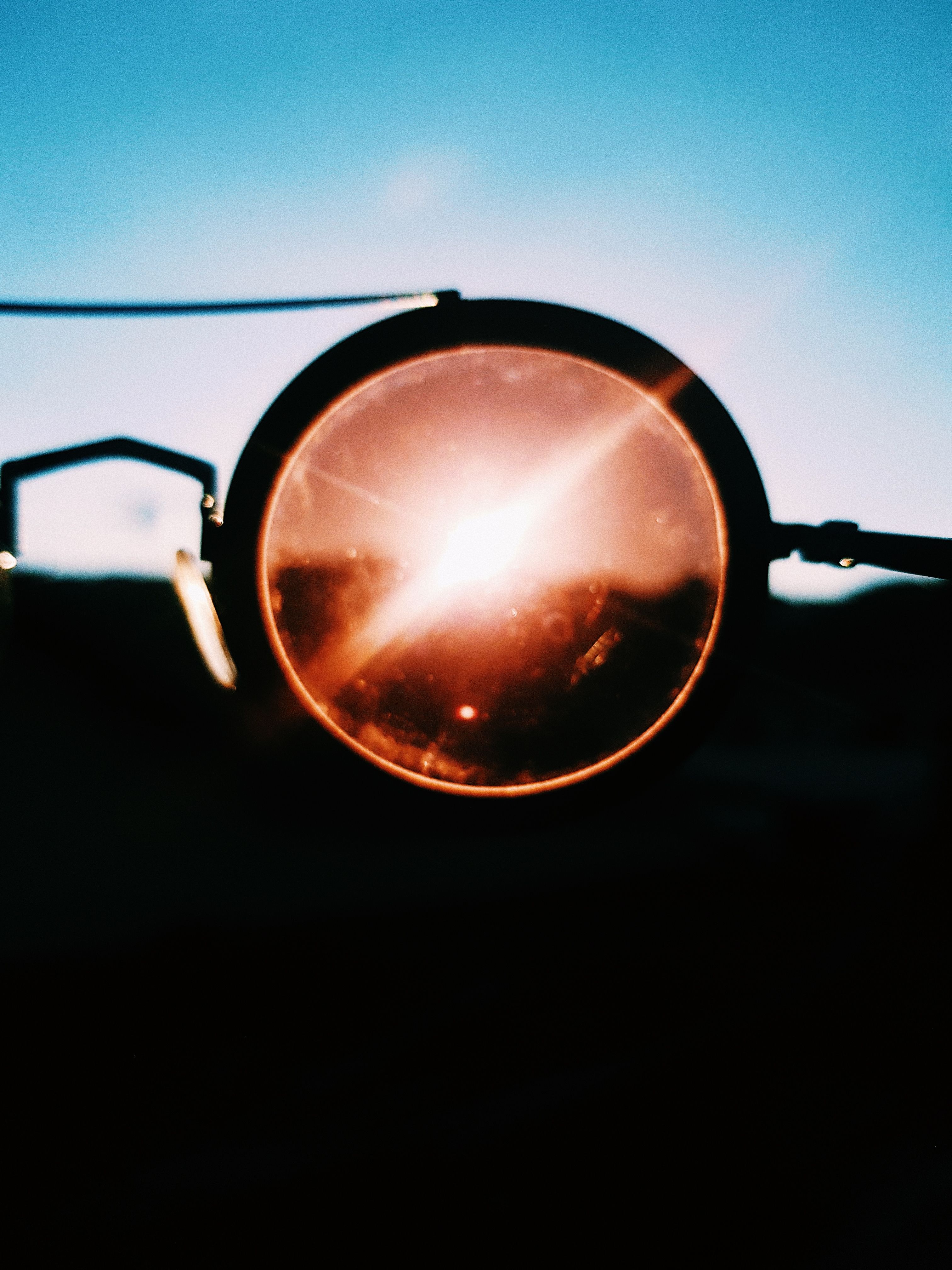
Regular sunglasses are designed to reduce the amount of ordinary sunlight reaching your eyes. They are useful for everyday outdoor conditions, but they are not designed for staring directly at the Sun.
Even very dark sunglasses can give you a false sense of security.
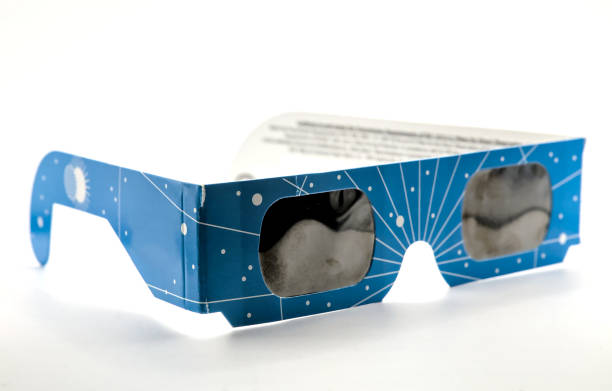
The correct way to directly view the Sun during an eclipse is to use properly manufactured solar viewing glasses or filters that meet the relevant safety standards.
These are not ordinary sunglasses.
They are specifically designed to reduce the Sun's visible, ultraviolet, and infrared radiation to safe levels for direct solar observation when used correctly.
And even with proper eclipse glasses, you should follow the manufacturer's instructions and inspect them for damage before use.
What About Cameras and Binoculars?
This is where things become even more dangerous.
Your eyes naturally contain a focusing system. Optical devices such as binoculars, telescopes, and cameras can collect far more sunlight and concentrate it even more strongly.
Pointing an unfiltered telescope or pair of binoculars at the Sun can cause catastrophic eye injury almost instantly if someone looks through the eyepiece.
The same principle applies to cameras.
A camera sensor can also be damaged by direct sunlight, depending on the equipment and circumstances.
Safe solar observation therefore requires proper solar filters designed for the front of the optical equipment.
A filter placed incorrectly or using improvised materials can be extremely dangerous.
This is not an area where experimentation is worth the risk.
Then Why Do People Watch Eclipses at All?
Because eclipses are genuinely extraordinary.
A solar eclipse occurs when the Moon passes between Earth and the Sun and temporarily blocks some or all of the Sun's light from reaching parts of Earth.
The Moon is dramatically smaller than the Sun, but it also happens to be much closer to Earth. Because of this remarkable coincidence, the two objects can appear almost exactly the same size in our sky.
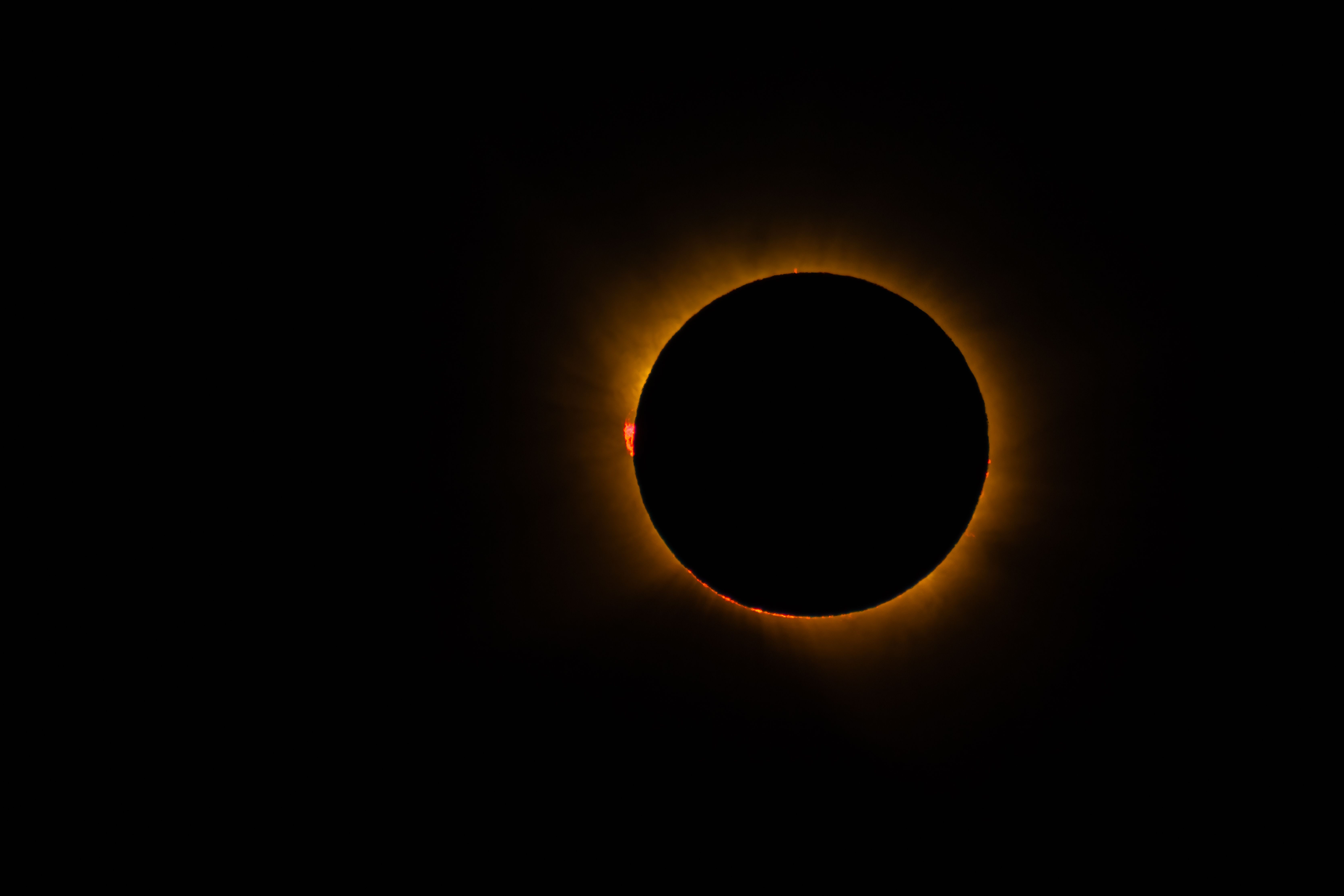
During a total solar eclipse, the Moon can completely cover the bright surface of the Sun.
For a brief period, the normally invisible outer atmosphere of the Sun—the corona—becomes visible.
The result is one of the most spectacular natural events humans can witness.
The answer isn't to avoid eclipses.
The answer is to watch them safely.
The One Exception: Totality
There is an important detail that makes solar eclipses particularly interesting.
During the brief period of totality—when the Moon completely covers the bright surface of the Sun—it is generally safe to look at the eclipse directly with the naked eye.
But this applies only during totality.
The moment even a tiny portion of the bright solar surface becomes visible again, you need to protect your eyes.
That means eclipse glasses should be worn before and after totality and throughout a partial eclipse.
This distinction is extremely important because totality can end suddenly. The Sun can reappear as a brilliant point of light at the edge of the Moon, producing what is sometimes called the "diamond ring" effect.
It is beautiful.
It is also the moment to put your eclipse glasses back on.
How to Watch an Eclipse Safely
The safest approach is surprisingly simple.
Use certified solar viewing glasses or an appropriate solar filter specifically designed for direct observation of the Sun. Put them on before looking toward the Sun, and keep them on whenever any part of the bright solar surface is visible.
Never substitute ordinary sunglasses, photographic film, smoked glass, homemade filters, or other improvised materials.
If you're using a telescope, binoculars, or a camera, use a proper solar filter designed specifically for that equipment and installed correctly.
You can also watch an eclipse without looking at the Sun at all.
A simple pinhole projector can project an image of the partially eclipsed Sun onto another surface. You can also watch a professionally produced livestream or view the event through an astronomy organization or observatory.
You don't have to risk your eyesight to experience the eclipse.
The Strange Lesson of a Solar Eclipse
Perhaps the most fascinating thing about solar eclipses is that they demonstrate how easily our senses can fool us.
The Sun hasn't become weaker because the Moon is covering it.
Our eyes simply receive less visible light, making the Sun appear less threatening.
And that illusion can be dangerous.
A solar eclipse is a reminder that something doesn't have to look dangerous to be dangerous. The same Sun that gives us daylight, warmth, and the energy that supports life can also damage the very eyes we use to admire it.
Yet that shouldn't make eclipses frightening.
It should make us more curious.
With the right protection, you can stand beneath a darkening sky, watch the Moon swallow the Sun, see the world around you transform for a few extraordinary minutes, and witness one of the most beautiful events our planet has to offer.
Just don't stare at the Sun to see it.
Look through the right filter.
Because the safest way to witness something extraordinary is to make sure you can still see everything afterward.








.jpg)
.jpg)
.png)


.jpg)
